




No. 1913, as she was originally registered, was delivered to Craig Quarry of the Denbigh Lime & Stone
Company in North Wales in 1923. The quarry closed after a short while, and No. 1913 was transferred to
Tunstead Quarry in Derbyshire where she spent the rest of her working life.
Tunstead Quarry was operated at that time by Buxton Lime Firms, who had been part of Brunner Mond since
1919. In 1926 Brunner Mond merged with United Alkali and British Dyestuffs Corporation to form ICI (Imperial
Chemical Industries). The quarry at Tunstead began operating in 1927 and it is believed that the loco was part
of the operation from the very beginning.
ICI implemented a vehicle numbering system which continued into the 1970’s. The RS stood for Road Service
(vehicle). The saddle tank received the number RS8 and operated in the quarry for the next 30 years until just
before steam working ceased in 1960.
Only one photograph is known to exist of RS8 as a steam locomotive. It was taken by G Alliez in 1957, but we
do not have access to the photograph at this time.
The picture on this page is of her sister RS16.

Steam


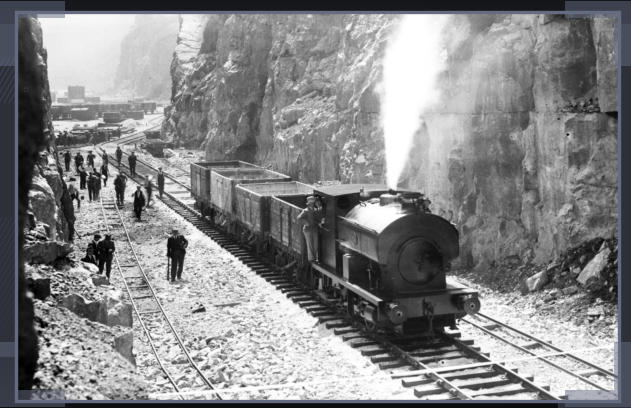
RS8 began life as a traditional British
saddle tank (steam) locomotive built
by the Avonside Engine Company in
1923 for a quarry in North Wales.
Steam


© Tarmac Ltd (a CRH Company) 2017.
Contact: reg.gartside@tarmac.com
Contact: steve.hambleton@tarmac.com


